This is a not-quite-transcript of a readers’ advisory webinar I developed for the Mid-America Library Alliance. The webinar will go live at the end of May 2026, but readers of this blog (all 15 of them) are getting access to all the information therein a little over a week ahead of time. And I do have to publish this early because otherwise I’d continue messing with it.
Since this is my personal blog (though I rarely update it), I plan to avoid naming the library at which I work or mentioning my surname. This is information that is easily discoverable, but, again, because this is a personal blog, I want to have some plausible deniability in case I one day say something on here that could get me into trouble.
Advertising blurb: “Join us for a discussion exploring the wide variety of graphic novels available for readers of all ages. Learn about the different types of graphic novels from comic to manga, from manhua to webcomics! We’ll discuss the many genres available in all formats. Attendees will leave with recommendations and read-alikes.“
Introduction & Agenda
Welcome! Welcome! I’m going to start this off with brief introduction. My name is Amber L— and I am a Collection Development Librarian at O— Public Library in O—, KS. Specifically, I am the selector for adult & teen fiction, graphic novels, and Spanish titles.
Graphic Novel: definition & extremely brief history
The term “graphic novel” was coined in 1964 by Richard Kyle in a comics fanzine, but wasn’t brought into popular usage until 1978 with Will Eisner’s A Contract With God.1 Since then it’s been widely adopted as a marketing term generally “used to disassociate [longer, more narrative] works from the juvenile or humorous connotations of the terms comics and comic books, implying that the work is more serious, mature, or literary than traditional comics.”2 This, however, is limiting because there are both juvenile and humorous graphic novels that are not popularly considered comic books—think Dav Pilkey’s Dogman and other similar titles—not to mention the graphic novels that are themselves bound collections of all or several volumes of a comic book run. Even Eisner ended up preferring the terms “graphic literature” or “graphic story” over “graphic novel.”3
My definition of a graphic novel—decided as I’m writing this—is:
A book-length form of sequential art published in comic book format that can be any genre including fiction, nonfiction, and anthologies.
Though maybe Art Spiegelman’s “a big comic book that [needs] a bookmark” works better.4 Regardless, the graphic novel is a format of literature rather than a genre and I think it’s important to recognize that. A graphic novel can be any genre and be written for any age reader. In fact, it’s only been since the 1950s with Fredric Wertham’s Seduction of the Innocent and the creation of the Comics Code Authority that the idea that comics should be exclusively for children entered our cultural milieu.5 Before that comics were written for and read by people of all ages.
One of the earliest works that we would recognize as a graphic novel (or at least a comic book) published in the West—Germany, specifically—is Joseph Franz van Goetz’s Leonardo and Blandine6 which was published in 1783 and consists of 160 illustrations with captions. It was adapted from a wildly popular musical of the same name, written and directed by van Goetz, and follows the story of two ill-fated lovers.7 In the United States, the earliest work we mostly recognize as a comic book is The Adventures of Mr. Obadiah Oldbuck by Rudolphe Töpffer in 1842,8 though it was originally published in Switzerland in 1839 as Histoire de M. Vieux Bois and it follows the various misadventures that Mr. Oldbuck gets into while wooing his lady-love. There’s some argument as to whether Töpffer’s book can be considered a comic book since it’s only 40 pages and both the story and narrative art are rather thin, but it does tell a story via sequential art and thus at least loosely fits the definition.9
Western graphic novel traits:10
- full color
- left-to-right reading
- artistic diversity, with a wide variety of styles and artists available to readers
- 10.25″ L X 6.625″ W
- can be paperback or hardcover
Of course, if we head east we can find even earlier representations of what we would call comics or graphic novels. China’s Tang Dynasty (618-907 C.E.) saw the introduction of narrative scrolls nearly 1400 years ago. Now, these scrolls, called Bianwen, were not comic books, rather they were proto-comics that were part of a larger literary movement utilizing vernacular (common or informal language), a combination of verse and prose, illustrations, and performance to spread Buddhist doctrine among the general population,11 but they were among the first kind of formal, recognized literary works to include sequential, narrative illustrations in the storytelling. A style of storytelling that only grew more popular in the coming centuries with:
“the invention of woodblock printing during the Song Dynasty (960–1279 CE) revolutioniz[ing] the production of illustrated books, making them more accessible to a wider audience. Throughout the Ming (1368–1644 CE) and Qing (1644–1912 CE) dynasties, comic books became a popular form of entertainment, with stories ranging from historical epics to folk tales.”12
Today, of course, telling a story through the use of sequential, narrative art has grown and evolved to become the comics and graphic novels that we know and recognize (and hopefully love!) today.
To the East!: Manga, Manhwa, & Manhua
Personally, I place manga and other East Asian comics under the greater graphic novel umbrella because they fit within my personal definition of the term. This is somewhat controversial because some readers consider Eastern comics to be a completely different thing by virtue of being, as far as I can tell, (1) a different size and shape than Western comics, and (2) sometimes read right-to-left instead of left-to-right. For my purposes, as a selector, they are the same thing and are housed with each other in my libraries, though for the sake of space, and because it gives me room for a more robust collection, I have separated the Eastern comics from the Western comics on the shelves. Basically, in the overall graphic novel section I have a manga subsection where all of the East Asian style comics are housed.
So, this brings us to the really fun world of manga, manhwa, and manhua! Which are the comic books (graphic novels) of the “big three” East Asian countries: Japan (manga), South Korea (manhwa), and China (manhua).
Manga | 漫画 | マンガ
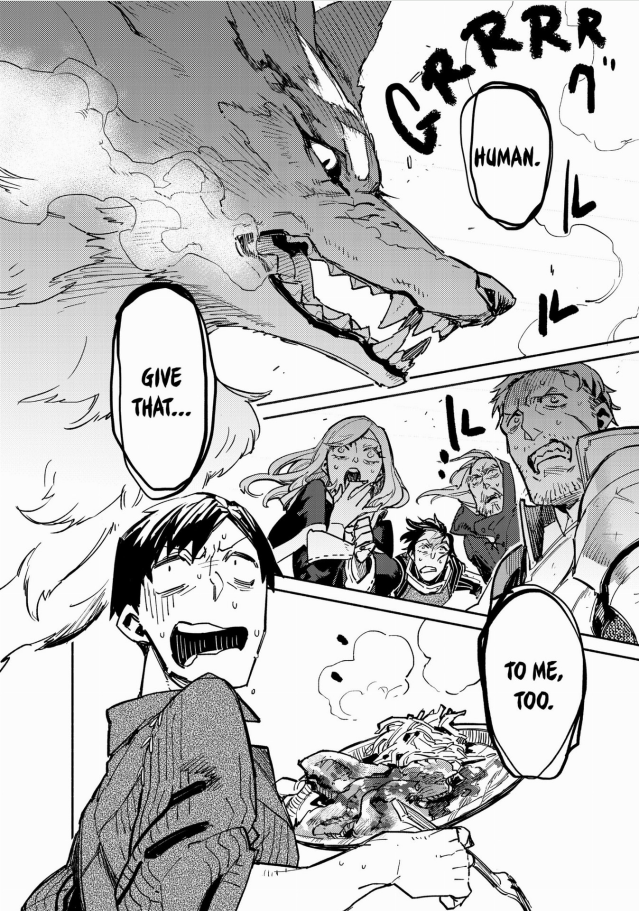
Of the three types of comics, manga is by far the most popular. This is due to several factors, the first being that manga has been available in the West the longest with a redrawn adaptation of Osamu Tezuka’s Astro Boy being published in the United States in 1965 and a translated but otherwise original Barefoot Gen by Keiji Nakazawa being released in 1978.13 The second factor fueling manga’s popularity is that most anime are adapted from manga. Third, mostly due to manga’s popularity, the translation quality for manga is very, very good. And, finally, it’s incredibly easy to find English translations of manga because even if there isn’t an official translation, there’s usually at least one fanbase translating the text and throwing it up online somewhere.14 In fact, that’s how I originally read the second thru fifth volumes of Umi Sakurai’s A Man and His Cat.
As of 2023, there are more manga sold in the U.S. than any other comic or graphic novel. They run the gamut of both genres and age ranges, and can be anything from a business book or travel guide to a fantasy, romance, mystery, horror, and beyond. There are four main types (genres?) of manga:
- Shonen – which is very action-oriented and written with adolescent boys in mind. Examples include: One Piece, Bleach, Fullmetal Alchemist, Demon Slayer, Naruto, Dragon Ball, InuYasha (my favorite), etc.
- Shojo – which is more emotionally-driven and romantic and written with girls in mind. Examples: Fruits Basket, Ouran High School Host Club, High School Debut, Ao Haru Ride, Vampire Knight, Boys Over Flowers, My Little Monster, etc.
- Seinen – is written for older teens and adults and often have very mature elements, including (sometimes) pornography. Exaples: Lone Wolf and Cub, Monster, Maison Ikkoku, Mushishi, Tokyo Ghoul, Berserk, etc.
- Josei – is written for older women and focuses on emotional conflicts and romance with far less action than seinen manga generally has (though these also sometimes include pornography or pornographic images). Examples: Happy Marriage, Midnight Secretary, Yakuza Lover, Ôoku: The Inner Chambers, Firefly Wedding, etc.
Manga traits:15
- black and white, with color usually only used for covers and special editions
- right-to-left reading
- highly expressive character design
- most tankōbon (volumes) dimensions measure 7.5″ L x 5″ W
- usually paperback
Manhwa | 만화 | 漫畵
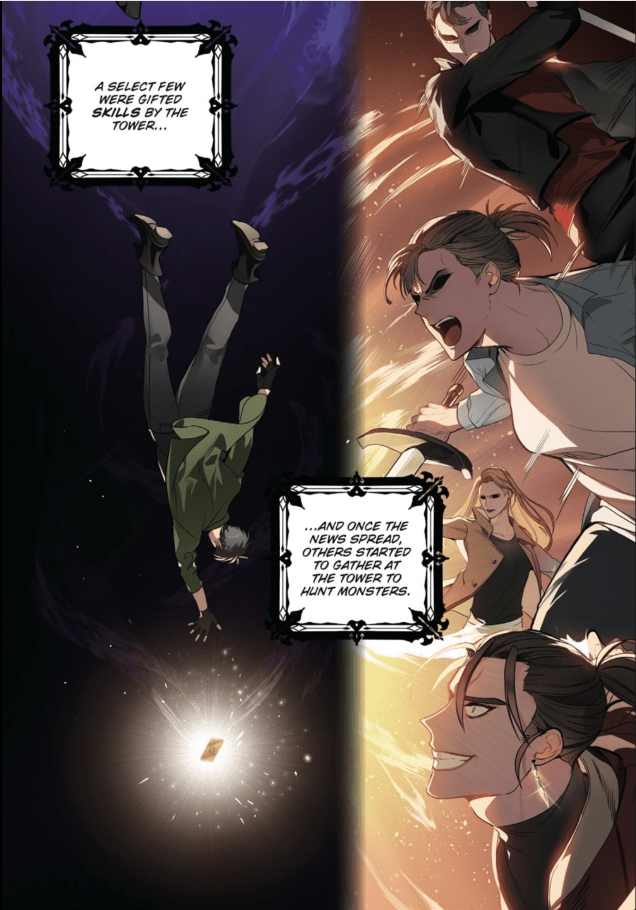
Tracing their history back to Japanese-occupied Korea, manhwa (Korean comics) have, until relatively recently, faced a lot of backlash and suppression. The earliest manhwa were, not unsurprisingly, very political and the government actively worked to censor them, considering many topics covered too sensitive, problematic, and controversial. This is one of the reasons why they didn’t really hit the international stage until until about a decade into the 21st Century. Even so, manhwa are growing more popular in the U.S. due to the ease of access to and popularity of webcomics. The commercial success of works such as Solo Leveling by Chugong, Omniscient Reader’s Viewpoint by UMI (which is soon to have an anime), and Why Raeliana Ended Up at the Duke’s Mansion by Whale helps too.
Most of the Manhwa I am familiar with started off as webnovels which then got adapted as webcomics, then printed comics, until, finally (and increasingly often), becoming an anime. An increasing number of manhwa are being printed in the United States, and they may soon rival manga in both availability and popularity. If you want to stay abreast of upcoming and popular manhwa, pay attention to sites such as Webtoons.16
Manhwa traits:17
- full color
- left-to-right reading
- an illustration style that emphasizes action and fluidity of movement
- danhaengbon (volumes) generally run slightly larger than manga’s tankōbon at 8.25″ L x 5.76″ W
- digital first… usually
- can be paperback or hardcover
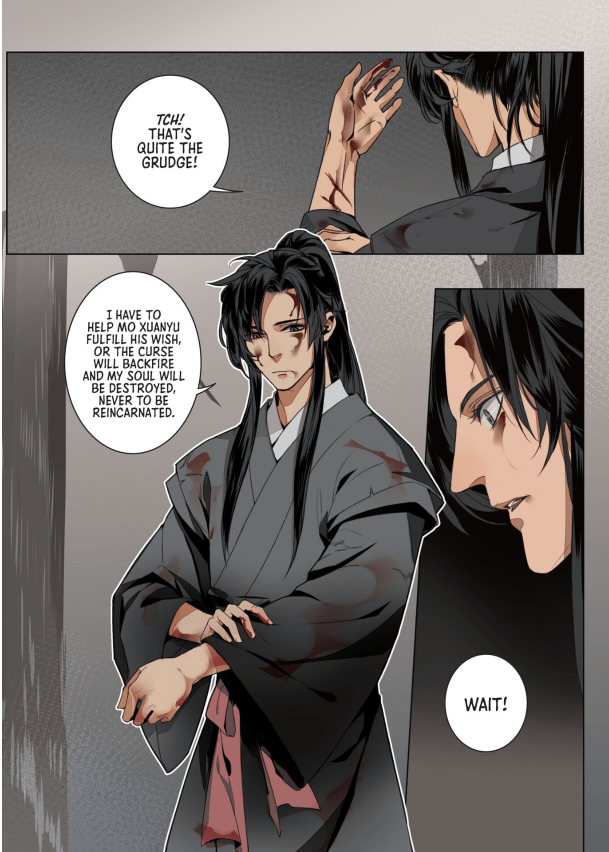
Manhua | 漫画
The least well known (at least in the West) of the Eastern comics I’m covering is China’s manhua, and there’s good reason for that: manhua is just breaking into the American market. Like, as we speak. Manhua are comics created in China, Taiwan, or Hong Kong. Their structures vary, with the manhua produced in mainland China reading right-to-left and those produced in Taiwan or Hong Kong reading left-to-right. There are two distinct themes that frequently show up in manhua: wuxia and xianxia.
Wuxia roughly translates to “martial hero” and is the more realistic of these two tropes. In wuxia, the reader follows a martial arts student or master who takes on great challenges. The protagonist is skilled in combat or becomes skilled in combat, and sometimes there’s magic involved but it’s usually magic that is tied to martial arts like the ability to jump so far you’re almost flying (think Crouching Tiger, Hidden Dragon). Wuxia is very action-oriented and features battles between good and evil. Examples: Martial King’s Retired Life, A Single Strike of Shimmering Frost; The Smiling, Proud Wanderer (Swordsman); and, There Are Weirdos All Over Jianghu.18
Xianxia translates to “immortal hero” and is more akin to fantasy in Western literature. It is heavily inspired by Chinese mythology and Taoist legends and is filled with magic, demons, fantastical creatures, immortal beings, gods, etc. Many of the stories take place in a kind of mythologized past. The xianxia hero levels up– they go through tremendous growth due to the influences of the supernatural on their lives.19 Examples: Heaven Official’s Blessing, Grandmaster of Demonic Cultivation: Mo Dao Zu Shi, Rebirth of the Strongest Empress, The Daily Life of the Immortal King, etc.20
The vast, VAST majority of manhua do not have English translations, so the popularity of these comics is really limited to China and Chinese-speaking communities. This is changing, but it’s slow going, and because manhua uses a lot of slang, proverbs, and terminology the translations—especially fan-translations—can feel a little clunky in English. Like manhwa, most manhua I’m familiar with are adapted from novels, web or traditional, and most rely heavily on Chinese mythology with many focusing on martial arts and cultivation. A lot of the manhua currently being translated into English are BL (Boy Love) manhua and focus on the romantic connection between the two male leads (or sometimes the male lead and the villain).21
Manhua traits:22
- full color
- reading direction varies and can be either left-to-right or right-to-left
- an art style that lands somewhere between manga and manhwa but with more realistic lines and an almost watercolor feel
- dānxíngběn (volumes) generally run around the same size as danhaengbon, 8.25″ L x 5.76″ W, but can run a larger
- can be paperback, hardcover, or digital
Web/Vertical comics
Thanks to the internet and especially the adoption of smartphones, comics are more widely available now than they ever have been. Authors and artists can bypass traditional publication routes and can publish their work on any number of web comic sites or even host it on their own site. Manhwa writers were especially early adopters of the technology with the first Korean webcomic sites being published as early as 2004.23 It is well worth it to pay attention to what’s popular on these sites, because that popularity often translates into book and anime adaptations. My personal favorite, and one I’m really hoping gets both a physical run and an anime, is The Lout of Count’s Family (it’s available on Tapas). It’s so good. So good.
Many webcomics are optimized to be read on a smartphone or tablet and thus are read vertically, scrolling up with your thumb. This is why they’re sometimes referred to as vertical comics and why they have to be adapted when published a physical format.
Some of the sites I follow are:
Why read graphics
Though often dismissed by critics and unappreciated in literary circles, graphic novels offer a vivid reading experience that captivates readers from all demographics. In fact, there’s some evidence that reading comic books increases reading comprehension by helping the reader decode complex narratives through the combination of visual and textual storytelling.24 This is likely because of what neurologists call “pictoral superiority effect” which is phenomenon in which pictures and images are more likely to be remembered than words.25 Basically, after we are presented with information, within 24 to 72 hours most of us are unable to recall roughly 80-90% of that information,26 but when a picture is added we only lose, on average, 35% of that same information. That’s a 65% recall! Humans are hardwired to find visual information—art—far more memorable and compelling than words alone.27
This increase in reading comprehension leads to other benefits for the reader, including a greater vocabulary, allowing for a deeper emotional connection to the story and characters, greater critical thinking skills, and an acceleration of what Stanford history professor Tom Mullaney calls “the process of getting to subtlety.”28 Beyond that, graphic novels are less intimidating than more traditional literature. This can help bridge reading gaps in younger or newer readers, language learners, and people who are otherwise disinterested in reading. “For example, a middle school student who finds traditional novels daunting might be more inclined to pick up a graphic novel, thus fostering a habit of reading that can extend to other forms of literature.”29
Fun fact:
Did you know that Tom Mullaney, a history professor at Stanford University, uses graphic novels along with academic texts in his classes? AND You can take a non-credit, self-paced, online course by that professor called GLOBAL HISTORY through GRAPHIC NOVELS if you’re interested.
Readers’ Advisory
Like any type of reader’s advisory, graphic novel reader’s advisory starts with determining the preference of the reader. This can be done with the reader’s advisory interview. Ask questions! What does the reader usually read? What do they like to read? What do they want to read? If they don’t read, what do they watch? What genres are they interested in? What are their interests? Once the reader’s interest is established, just… find something that will matches their preference.
I don’t know a genre that is not represented in graphic novel format. They want a cookbook? There’s Cooking Comics: Simple Skills, Fantastic Food by Lauren Thomson and Tsukuru Anderson or Cook Korean! A Comic Book with Recipes by Robin Ha or any number of other titles that you can find and recommend. Are they a fan of horror? Gou Tanabe is adapting H.P. Lovecraft’s work and Junji Ito always hits, and if they don’t feel like reading manga you can suggest The Me You Love in the Dark by Skottie Young or Pig Wife by Abbey Luck. Stephen King’s Dark Tower series has been adapted into graphic novels. Are they looking for something literary? Nearly every Shakespeare play has been adapted to both Western-style graphic novels or manga (and, personally, I think comics are the second-best way to experience Shakespeare—third-best if you separate watching it live and watching it as a movie/tv show). Jane Eyre is part of the Manga Classics series, so is Dracula, and Emma, and The Scarlet Letter, and Pride and Prejudice, and the list goes on. There are a number of contemporary novels that have been adapted to comic: Parable of the Sower, The Three-Body Problem, Dungeon Crawler Carl, Handmaid’s Tale, and so on.
So, how do you find graphic novels to recommend without being a fan yourself? The first and easiest option is a search engine and a keyword search: Google, Bing, DuckDuckGo, Ecosia, whatever you prefer and then plug in whatever terms match your reader’s needs (e.g. “scifi graphic novel” or “popular horror manga” or whatever). The results will differ slightly depending on the engine used, but you will get useable results regardless. You can then cross-reference those results with your library’s catalog and, Bob’s your uncle,30 the reader is sent home with a book or two.
If you want to go a step further, learn more about comics and graphic novels in general, and keep abreast of upcoming, new, and popular titles then I recommend regularly visiting any (or all) of the resources I have listed below. Edelweiss and NetGalley are wonderful if you (a) want to see what’s coming out, or (b) want to get an ARC (advanced reader’s copy) of a title. I find Edelweiss’s search filters function to be especially useful for seeing what titles are upcoming, and you can save your filter which makes future searches so much easier! The LibGuides are great for learning about graphic novels in general, finding lists of popular, award-winning, or (sometimes) genre-specific graphic novels, and discovering other graphic novel resources. The Comic Sites feature journals and other professional news sites that focus almost exclusively on comic and graphic novels. These are invaluable resources for all kinds of comic news, from reviews to anniversaries to awards to news to author interviews, and well worth checking out periodically. Finally, Genre Sites & Blogs lists some of the sites I visit that feature news, reviews, and other information beyond graphic novels, but also cover graphic novels that fall within their purview. For instance, Fangoria is magazine and website that covers horror news, entertainment, and reviews, and, as part of that, occasionally features articles on horror graphic novels. Game Rant is a site that mainly reports on videogames, but they also cover anime, graphic novels, manga, manhwa, and manhua. The information is out there; you only have to look.
Now, get out there and look!
Resources
Want the handout?
LibGuides
Comic Sites
Genre Sites & Blogs
- Search Terms:
- comics
- graphic novel
- manga
- manhwa
- manhua
Read-Alikes
The Legend of Vox Machina
- Delicious in Dungeon by Ryoko Kui
- Dungeon Crawler Carl by Matt Dinniman
- Dungeons & Dragons: Total Party Killers by Christopher Hastings
- Unwanted Undead Adventurer by Yu Okano
- Failure Frame by Kaoru Shinozaki
- A Banished Odd-jobber Starts a New Life by Uzaki Takamaru
Reacher
- Reckless by Ed Brubaker
- Blacksad by Juan Díaz Canales
- 100 Bullets by Brian Azzarello
- Concrete by Paul Chadwick
- Human Target (DC series)
From
- The Night Eaters by Marjorie Liu
- Something is Killing the Children by James Tynion IV
- Phantom Road by Jeff Lemire
- Harrow County by Cullen Bunn
- Sleep by Zander Cannon
- Nectar by Jeremy Robinson
A Good Girl’s Guide to Murder
- The Apothecary Diaries by Natsu Hyuuga
- Children of the Sea by Daisuke Igarashi
- Go with the Clouds, North-By-Northwest by Aki Irie
- This Place Kills Me by Mariko Tamaki
- Terrifying Tales of Vivian Vance by Josh Ulrich
- Hello Sunshine by Keezy Young
Some of My Personal Recommendations
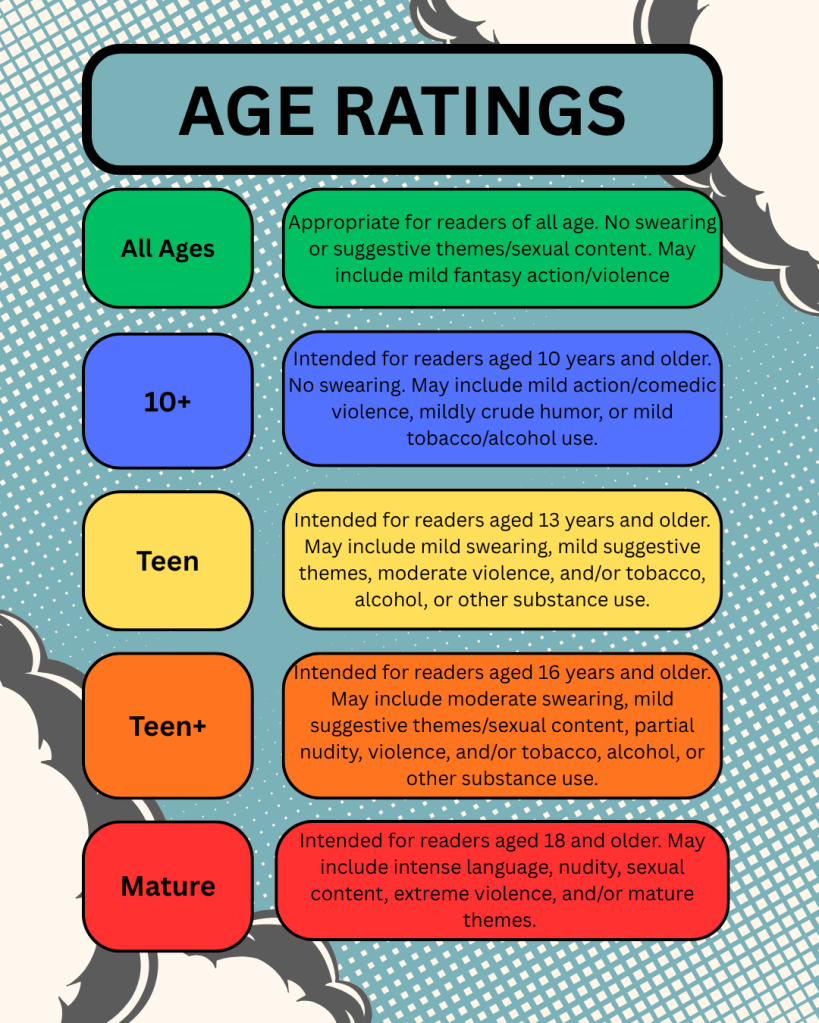
Below are a few of my favorite graphic novels from several different genres. I’ve given them an age rating based on the criteria in the image to the left of this text.
ADAPTATIONS
| TYPE | AGE RATING | TITLE |
|---|---|---|
| Graphic Novel | Teen | The Magic Flute by W. A. Mozart, adapted by P. Craig Russel |
| Graphic Novel | Teen | Parable of the Sower by Octavia E. Butler, adapted by Damian Duffy |
| Graphic Novel | Teen | A Wizard of Earthsea by Ursula K. Le Guin, adapted by Fred Fordham |
| Manga | Teen+ | H.P. Lovecraft’s The Shadow Over Innsmouth by Gou Tanabe |
ACTION/ADVENTURE
| TYPE | AGE RATING | TITLE |
|---|---|---|
| Graphic Novel | Mature | Falling in Love on the Path to Hell by Gerry Duggan and Garry Brown |
| Manhwa | Teen+ | Solo Leveling by Chugong |
| Manhwa | Teen+ | SSS-Class Revival Hunter by Bill K |
| Manga | Teen | One Piece by Eiichiro Oda |
| Manga | Teen+ | InuYasha by Rumiko Takahashi |
| Manga | Teen+ | Blue Exorcist by Kazue Kato |
| Manga | Teen | YuYu Hakusho by Yoshihiro Togashi |
| Graphic Novel | Mature | The Invisibles by Grant Morrison |
CHILDREN’S
| TYPE | AGE RATING | TITLE |
|---|---|---|
| Graphic Novel | All Ages | Zita the Spacegirl by Ben Hatke |
| Graphic Novel | All Ages | Poetry Comics by Grant Snider |
| Graphic Novel | All Ages | The Storm in the Barn by Matt Phelan |
| Manga | All Ages | Chi’s Sweet Home by Konami Kanata |
FANTASY
| TYPE | AGE RATING | TITLE |
|---|---|---|
| Manga | Teen | Campfire Cooking in Another World with My Absurd Skill by Ren Eguchi |
| Manga | Teen+ | The Person I Loved Asked Me to Die in My Sister’s Stead by Mizuki Nagano |
| Graphic Novel | Teen+ | Lore Olympus by Rachel Smythe |
| Manga | Teen+ | No Longer Allowed in Another World by Hiroshi Noda |
| Manga | Teen+ | The Strange Adventures of a Broke Mercenary by Mine |
| Manga | Teen+ | Apparently, Disillusioned Adventurers Will Save the World by Shinta Fuji |
| Graphic Novel | Mature | Saga by Brian K. Vaughn |
HORROR
| TYPE | AGE RATING | TITLE |
|---|---|---|
| Graphic Novel | Mature | The Me You Love In the Dark by Skottie Young |
| Graphic Novel | Mature | The Night Eaters by Marjorie Liu |
| Graphic Novel | Mature | Monstress by Marjorie Liu |
| Manga | Mature | The Witch and the Beast by Kousuke Satake |
| Graphic Novel | Mature | 30 Days of Night by Steve Niles |
| Graphic Novel | Mature (Teen+?) | Johnny The Homicidal Maniac: Director’s Cut by Jhonen Vasquez |
| Graphic Novel | Teen+ | Hellboy by Mike Mignola |
| Manga | Mature | Hellsing by Kouta Hirano |
| Manga | Teen | The Summer Hiraku Died by Mokumokuren |
| Graphic Novel | Mature | The Deviant by James Tynion IV |
MYSTERY/THRILLER
| TYPE | AGE RATING | TITLE |
|---|---|---|
| Graphic Novel | Mature | Blacksad by Juan Díaz Canales |
| Manga | Teen+ | Hard-Boiled Stories from the Cat Bar by Yourei Ono |
| Graphic Novel | Mature | My Favorite Thing is Monsters by Emil Ferris |
| Graphic Novel | Mature | The Deviant by James Tynion IV |
| Manga | Teen+ | Death Note by Tsugumi Oba |
| Manga | Teen+ | Monster by Naoki Urasawa |
| Manga | Mature | Banana Fish by Akimi Yoshida |
NONFICTION
| TYPE | AGE RATING | TITLE |
|---|---|---|
| Graphic Novel | Teen+ | The Black Panther Party: A Graphic Novel History by David F. Walker |
| Graphic Novel | Teen+ | The Dancing Plague by Gareth Brooks |
| Graphic Novels | Teen+ | The Harlem Hellfighters by Max Brooks |
| Graphic Novel | Teen | Days of Sand by Aimée de Jongh |
ROMANCE
| TYPE | AGE RATING | TITLE |
|---|---|---|
| Manga | Teen | If the Villainess and Villain Met and Fell in Love by Harunadon |
| Manga | Teen+ | Yakuza Fiancé: Raise wa Tanin ga Ii by Asuka Konishi |
| Manga | Teen+ | Reincarnated in a Mafia Dating Sim by Sora Goto |
| Manhwa | Teen+ | I Tamed My Ex-husband’s Mad Dog by Jkyum |
| Manga | Teen+ | Snow & Ink by Miyuki Unohana |
| Manga | Teen | Glasses with a Chance of Delinquent by NARUKI |
| Manga | Teen | Abe-Kun’s Got Me Now by Aki Iwai |
| Manhwa | Teen+ | Villains Are Destined to Die by Gwon Gyoeoul |
| Manga | Teen+ | The Ice Guy and the Gool Girl by Miyuki Tonogaya |
| Manga | Teen+ | Boss Bride Days by Narumi Hasegaki |
| Manhwa | Mature | Under the Oak Tree by Seomal |
SCIENCE FICTION
| TYPE | AGE RATING | TITLE |
|---|---|---|
| Graphic Novel | Teen+ | We Called Them Giants by Kieron Gillen & Stephanie Hans |
| Manga | Mature | The Ghost in the Shell by Shirow Masamune |
| Manga | Teen+ | Akira by Katsuhiro Otomo |
| Manga | Teen | Planetes by Makoto Yukimura |
| Manga | Teen+ | Ajin: Demi-Human by Tsuina Miura |
| Graphic Novel | Teen+ | Analog: A Cyber-Dystopian Noir by Gerry Duggan |
SUPERHERO
| TYPE | AGE RATING | TITLE |
|---|---|---|
| Graphic Novel | Teen+ | All-New Wolverine by Tom Taylor |
| Graphic Novel | Teen | Harley Quinn Black + White + Red by David Mandel & Paul Dini |
| Graphic Novel | Teen | Spider-Punk: Battle of the Banned by Cody Ziglar and Olivier Coipel |
| Graphic Novel | Teen | All-Star Superman by Grant Morrison |
| Graphic Novel | Teen | Mister Miracle by Tom King and Mitch Gerads |
| Graphic Novel | Teen+ | Hellboy by Mike Mignola |
| Graphic Novel | Teen | Black Panther by Ta-Nehisi Coates |
WEBCOMICS
| TYPE | AGE RATING | TITLE |
|---|---|---|
| Web | Mature | Collide by Wann |
| Web | Teen+ | The Lout of Count’s Family by Yu Ryeo-Han |
| Web | Teen+ | Love Lies by GGuyo & Setbyul Park |
Titles mentioned in the article:
GRAPHIC NOVELS
- A Contract With God by Will Eisner
- Dogman by Dav Pilkey
- Leonardo and Blandine by Joseph Franz van Goetz
- The Adventures of Mr. Obadiah Oldbuck by Rudolph Töpffer
MANGA
- Campfire Cooking in Another World with My Absurd Skill by Ren Eguchi
- Astro Boy by Osamu Tezuka
- Barefoot Gen by Keiji Nakazawa
- A Man and His Cat by Umi Sakurai
- One Piece by Eiichiro Oda
- Bleach by Tite Kubo
- Fullmetal Alchemist by Hiromu Arakawa
- Demon Slayer by Koyoharu Gotouge
- Naruto by Masashi Kishimoto
- Dragon Ball by Akira Toriyama
- InuYasha by Rumiko Takahashi
- Fruits Basket by Natsuki Takaya
- Ouran High School Host Club by Bisco Hatori
- High School Debut by Kazune Kawahara
- Ao Haru Ride by Io Sakisaka
- Vampire Knight by Matsuri Hino
- Boys Over Flowers by Yoko Kamio
- My Little Monster by Robico
- Lone Wolf and Cub by Kazuo Koike
- Monster by Naoki Urasawa
- Maison Ikkoku by Rumiko Takahashi
- Mushishi by Yuri Urushibara
- Tokyo Ghoul by Sui Ishida
- Berserk by Kentaro Miura
- Happy Marriage by Maki Enjoji
- Midnight Secretary by Tomu Ohmi
- Yakuza Lover by Nozomi Mino
- Ôoku: The Inner Chambers by Fumi Yoshinaga
- Firefly Wedding by Oreco Tachibana
MANHWA
- SSS-Class Revival Hunter by Sinnoa
- Solo Leveling by Chugong
- Omniscient Reader’s Viewpoint by UMI
- Why Raeliana Ended Up at the Duke’s Mansion by Whale
MANHUA
- Martial King’s Retired Life by Yi Ye Qing Tian
- A Single Strike of Shimmering Frost by Yu Xiao Lanshan
- The Smiling, Proud Wanderer (Swordsman) by Jin Yong
- There Are Weirdos All Over Jianghu
- Heaven Official’s Blessing by Mo Xiang Tong Xiu
- Grandmaster of Demonic Cultivation: Mo Dao Zu Shi by Mo Xiang Tong Xiu
- Rebirth of the Strongest Empress by Gong ZiZhuang
- The Daily Life of the Immortal King by Kuxuan
WEBCOMIC
- The Lout of Count’s Family by Yu Ryeo-Han
READER’S ADVISORY
- Cooking Comics: Simple Skills, Fantastic Food by Lauren Thomson and Tsukuru Anderson
- Cook Korean! A Comic Book with Recipes by Robin Ha
- Gou Tanabe (author/artist)
- Junji Ito (author/artist)
- The Me You Love in the Dark by Skottie Young
- Pig Wife by Abbey Luck
- Manga Classics:
- Jane Eyre by Charlotte Brontë
- Dracula by Bram Stoker
- Emma by Jane Austen
- The Scarlet Letter by Nathaniel Hawthorne
- Pride and Prejudice by Jane Austen
- Parable of the Sower by Octavia Butler
- The Three-Body Problem by Cixin Liu
- Dungeon Crawler Carl by Matt Dinniman
- The Handmaid’s Tale by Margaret Atwood
Footnotes
- Ma, Pearly. (2020, January 17). A Brief History of Comics and Graphic Novels. Public Libraries Singapore. https://medium.com/publiclibrarysg/a-brief-history-of-comics-and-graphic-novels-de096c09b8b3. ↩︎
- New World Encyclopedia. (2024, May 24). Graphic novel. Retrieved 16:58, May 7, 2026 from https://www.newworldencyclopedia.org/p/index.php?title=Graphic_novel&oldid=1144499. ↩︎
- University of Maryland. University Libraries. (2026, April 21) Graphic Novels & Comics: What Is a Graphic Novel?. Retrieved May 7, 2026 from https://lib.guides.umd.edu/comics. ↩︎
- University of Maryland. University Libraries. (2026, April 21). Graphic Novels & Comics: What Is a Graphic Novel?. Retrieved May 7, 2026 from https://lib.guides.umd.edu/comics. ↩︎
- Karen. (2017, March 24). Comic Books, Adults, and a History of Stigmatization. The Artifice. https://the-artifice.com/comic-books-adults-history-stigmatization/ ↩︎
- Bleck, Andy. translator. (2007, November) The First Graphic Novel – 1787 “Lenardo and Blandine” by Joseph Franz van Goetz. Andy’s Early Comics Archive. https://konkykru.com/e.goez.1783.lenardo.und.blandine.1.html ↩︎
- Canterbury Classics. (2018, November 7). The Origins of the Graphic Novel. Retrieved (April 30, 2026) from https://www.canterburyclassicsbooks.com/blog/2018/11/07/the-history-of-the-graphic-novel/ ↩︎
- Töpffer, Rodolphe. (between 1840 and 1849). The Adventures of Mr. Obidiah Oldbuck. Dartmouth Digital Collections. Retrieved May 7, 2026 from https://collections.dartmouth.edu/archive/text/ocn259708589/diplomatic/ocn259708589-diplomatic.html ↩︎
- El Santo. (2011, March 22). Know Thy History: The Adventures of Mr. Obadiah Oldbuck. The Webcomic Overlook. https://webcomicoverlook.wordpress.com/2011/03/22/know-thy-history-the-adventures-of-mr-obadiah-oldbuck/ ↩︎
- Mira. (2025, September 7). Manga vs Manhwa vs Comics: Unlocking the Physical Differences for Savvy Collectors. ComicsDeck. https://comicsdeck.com/manga-vs-manhwa-vs-comics-physical-differences/ ↩︎
- Wikipedia. (2025, June 16). Bianwen. Retrieved April 30, 2026 fromhttps://en.wikipedia.org/wiki/Bianwen ↩︎
- Bella. (2025, September 17). Exploring Chinese Comics History & Top 10 Manhua. Wukong Education. https://www.wukongsch.com/blog/chinese-comics-post-33648/ ↩︎
- Wikipedia. (2026, February 7). Manga outside Japan. Retrieved May 7, 2026 from https://en.wikipedia.org/wiki/Manga_outside_Japan#United_States ↩︎
- Caleb. (2022, November 2) Manga vs Manhwa vs Manhua—Battle of the Asian Comics. Caleb’s Musings. https://medium.com/@calebmusings/manga-vs-manhwa-vs-manhua-battle-of-the-asian-comics-484ec60b31f8 ↩︎
- Mira. (2025, September 7). Manga vs Manhwa vs Comics: Unlocking the Physical Differences for Savvy Collectors. ComicsDeck. https://comicsdeck.com/manga-vs-manhwa-vs-comics-physical-differences/ ↩︎
- Yamulla, Joe. (2023, May 24). What’s the Difference Between Manhua vs. Manhwa vs. Manga?. Book Baby. https://blog.bookbaby.com/how-to-self-publish/publishing-industry-news/difference-between-manhua-manhwa-manga ↩︎
- Mira. (2025, September 7). Manga vs Manhwa vs Comics: Unlocking the Physical Differences for Savvy Collectors. ComicsDeck. https://comicsdeck.com/manga-vs-manhwa-vs-comics-physical-differences/ ↩︎
- Anime Planet. (2026) Wuxia Manga. Retrieved May 13, 2026 from https://www.anime-planet.com/manga/tags/wuxia ↩︎
- Yamulla, Joe. (2023, May 24). What’s the Difference Between Manhua vs. Manhwa vs. Manga?. Book Baby. https://blog.bookbaby.com/how-to-self-publish/publishing-industry-news/difference-between-manhua-manhwa-manga ↩︎
- Anime Planet. (2026) Xianxia Manga. Retrieved May 13, 2026 from https://www.anime-planet.com/manga/tags/xianxia ↩︎
- Caleb. (2022, November 2) Manga vs Manhwa vs Manhua—Battle of the Asian Comics. Caleb’s Musings. https://medium.com/@calebmusings/manga-vs-manhwa-vs-manhua-battle-of-the-asian-comics-484ec60b31f8 ↩︎
- Mira. (2025, September 7). Manga vs Manhwa vs Comics: Unlocking the Physical Differences for Savvy Collectors. ComicsDeck. https://comicsdeck.com/manga-vs-manhwa-vs-comics-physical-differences/ ↩︎
- Yamulla, Joe. (2023, May 24). What’s the Difference Between Manhua vs. Manhwa vs. Manga?. Book Baby. https://blog.bookbaby.com/how-to-self-publish/publishing-industry-news/difference-between-manhua-manhwa-manga ↩︎
- United Through Reading. (2024, July 22). The Benefits of Graphic Novels: Why They Count as Reading. https://unitedthroughreading.org/the-benefits-of-graphic-novels-why-they-count-as-reading/ ↩︎
- Wikipedia. (2025, October 19). Picture Superiority Effect. Retrieved May 13, 2026 from https://en.wikipedia.org/wiki/Picture_superiority_effect ↩︎
- BCIT Library. (2026, February 4). Study Skills: Memory, Retention & Recall. Retrieved May 13, 2026 from https://libguides.bcit.ca/studyskills/memory ↩︎
- Hult News. (2013). Can Reading Comics Make Us Smarter?. Hult International Business School Blogs. https://www.hult.edu/blog/can-reading-comics-make-us-smarter/ ↩︎
- De Witte, Melissa. (2022, February 10). Graphic novels can accelerate critical thinking, capture nuance and complexity of history, says Stanford historian. Stanford Report. https://news.stanford.edu/stories/2022/02/graphic-novels-can-accelerate-critical-thinking-capture-nuance-complexity-history ↩︎
- United Through Reading. (2024, July 22). The Benefits of Graphic Novels: Why They Count as Reading. https://unitedthroughreading.org/the-benefits-of-graphic-novels-why-they-count-as-reading/ ↩︎
- I just really wanted to use “Bob’s your uncle” in a sentence. ↩︎

