
Today’s tale comes from Fairy and Folktales of the Irish Peasantry collected by William Butler Yeats. The story is called “Soul Cages” and interestingly enough it, too, is about a fisherman. Maybe I have my theme for this season, eh? Anyway, enjoy…
Everybody’s heard of mermaids, right? Those alluring creatures of the sea with the top half of ‘em being that of a beautiful lady and the bottom half of ‘em being a fish’s tail. Ever wonder about the male version of ‘em? Those’re called merrows and to be sure are not nearly so pretty as their female companions, having green hair and green teeth, small eyes, and bulbous red noses. Merrows are said to be jolly fellows, though, always good for a story and a drink—it’s on account of the drinking that their noses are so large and red. Or at least that’s what I heard.
Now it so happens that in my grandfather’s grandfather’s time – or maybe a little bit before – on the coast of Ireland in County Clare there lived a fisherman by the name of Jack Dogherty. Jack lived exactly as his father and grandfather had before him, which is to say, all alone except for his wife and whatever children were yet to come. He lived in the same spot too, mighty far away from town with only seagulls and seals for neighbors. The people in town often wondered why the Dogherty family was so fond of their wild spot away from the comforts and company of civilization, with naught but the great wide ocean to look upon, but they had their reasons, the Dogherty’s did (as you’ll well see).
The Dogherty house was located in just about the only spot on that particular coastline where anybody could make a comfortably liveable abode. Just beside their house was a neat little creek where a boat could be snugged in, safe as a puffin in her nest, and out from that creek into the sea ran a ledge of sharp and broken rocks.
(conspiratorially) When the Atlantic, as is her custom, is raging with storms and a strong westerly is blowing over the coast, more than one richly-laden merchant ship broke themselves upon those rocks. What then happened to their goods? The bales of cotton, silk, and tobacco, the pipes of wine, casks of brandy, kegs of ale, and whatnot? Sure, some’d end up at the bottom of the sea, but, wouldn’t you know it, some’d wash right up on shore just in front of the Dogherty house.
I wouldn’t be lying to say that the Doghertys were kind and humane to any sunken sailor lucky enough to make it to shore! More than once Jack took his rowboat out to lend a hand towards bringing off the crew from the wreck. But when the ship had gone to pieces and all the crew was lost, surely, nobody’d blame the Doghertys for keeping or selling whatever goods washed ashore their own selves, except maybe the king, and everyone knows royalty’s rich enough without having to get what’s floating in the sea so nobody’s telling them!
So Jack and his wife had their own little estate there by the sea and lived as rich as any’d want to. Beyond the fish he brought in, Jack had the supplying of half the gentlemen in the county with those Godsends that washed ashore. So no couple ate, drank, or slept better than Jack and his wife, nor did one make a prouder appearance at church on Sunday than Mr. and Mrs. Dogherty.
Now Jack and them being so far from civilization and so close to the sea were privy to many a strange sight for, as you know, lonely coastlines are strange and eerie places, but Jack wasn’t afraid. In fact, he reveled in the strangeness of it! He was so far from being afraid of merrows and the like that the very first wish in his heart was to meet one. He’d heard they were mighty fellows and that luck always came from an acquaintance to them. So he’d never but dimly discern merrows moving along the face of the waters in their robes of mist, but he’d make for them directly, and many a scolding did Biddy (that being the name of Jack’s wife) bestow upon Jack for spending his whole day out at sea and bringing home no fish. Little did poor Biddy know the fish that Jack was after!
It was rather annoying to Jack that though he lived in a place where merrows were as plenty as lobsters, that he never could get a right view of one. What vexed him more was that both his father and his grandfather had often and often seen them. Why Jack even remembered stories, when he was a child, of his grandfather being such friends with a merrow that it was only for fear of vexing a priest that Jack’s own da’ didn’t have a merrow as a godfather. Though, if pushed, Jack would admit that he didn’t know this to be exactly true. It was true enough for stories though and that is true enough!
Fate, it seemed, after years of keeping Jack from knowing any more, began to believe that it was only right that he should know as much as father and grandfather did. Accordingly, one day he strolled a little further northward along the coast than usual and as he was turning a point saw something like to nothing he had ever seen before, perched on a rock a little ways out to sea. It looked green in body, as well as he could discern at that distance, and he would have sworn—had such a thing not been impossible—that it had a cocked hat—like what Napoleon would’ve worn—in it’s hand.
Well, Jack stood for a good half an hour, straining his eyes and wondering at it, before his patience let out and he finally whistled loudly and hailed the merrow—for a merrow it must’ve been! What happened then? Why, the creature gave a start, shoved the hat on his head, and dived down headfirst from the rock into the water!
This near-miss peaked Jack’s curiosity and he was constantly thereafter directing his steps to that point in the hopes of meeting that merrow properly. Still, he never did see that sea-gentleman with a cocked hat no matter how many times he went back. And he went back with some great frequency, again and again and again did he until he had quite convinced himself that what he saw that day was all in his mind, a daydream because his want to befriend a merrow was so strong.
He kept going back though. Just in case.
Then one rough day, when the sea was running mountains high, Jack got it into his head to go and look out on that merrow’s rock—that maybe he’d have more luck if he went out in the wind rather than waiting for a nice, calm day as he had been. And lo! Who did he espy but that very merrow (or one much like it) cutting fish on the rock, then diving down and coming up and diving down and coming up again.
So now Jack knew he only had to wait for a good blustery day to see a merrow—something he checked to make sure he was right by repeating several times. But that he could see one of the gentlemen of the sea almost any time he wanted wasn’t nearly enough for him. He wouldn’t be satisfied until he became friends with one. “Much will have more” as the saying goes and Jack was just bound and determined.
That determination paid out when one spectacularly blustering day, before he could get to the point where he could see the merrow’s rock, a storm came on so furiously that Jack was obliged to take shelter in one of the caves that are so numerous along the coast. And isn’t he surprised to find himself with company? There in the cave, sitting as if deep in serious thought, a merrow! It had long, green teeth, green hair, pig eyes, and a red nose. It sat there naked as anything with a fish’s tale, legs with scales, and short fin-like arms. And there beneath it’s arm was the tricorn (or cocked) hat!
Well, Jack shook off his surprise, went up to that merrow and bowed as best he could.
“Your servant, sir,” said he.
“Your servant, kindly, Jack Dogherty,” the merrow answered.
“To be sure, then, how is it that your honor knows my name?!” exclaimed Jack.
“And why wouldn’t I know it,” the merrow said, a twinkle in his eye, “me knowing your grandfather before he was married to Judy Regan, your grandmother! Oh, I was fond of your grandfather, Jack. He was such a mighty worthy man that I never met his match above or below, before or since, for sucking in a shellful of brandy. I hope, my boy, that you take after him!”
“You can be sure of it! If’n my ma raised me on nothing but I couldn’t hold it better than I do now,” bragged Jack.
“Well, I like to hear talk like that, Jack! You and I must get better acquainted—if only for your grandfather’s sake. But fo’sure I hope you’re a better drinker than your father. That man had no head at all.”
“Oh, I’m sure since your honor lives down under the water that you must be obliged to drink a power to keep any heat in you in such a cruel, damp, cold place,” said Jack. “I’ve often heard of men drinking like fishes, so I can’t imagine what fishes drink like. Might I be so bold as to ask where you get the spirits?”
“Where do you get them yourself, Jack?” the merrow answered touching his finger to the side of his nose to indicate a shared secret.
“Oh-ho-ho!,” cries Jack, “Now I see how it is! And I suppose you have a nice dry cellar down below to keep it all in.”
“You let me worry about the cellar, Jack,” the merrow said with a knowing wink.
“I’m sure it’s a worthy thing to look at,” said Jack.
“You might say that, Jack,” said the merrow, “and iffen you meet me here next Monday, just at this time, we will talk a bit more about the matter.”
So Jack and the merrow parted the best of friends. On the Monday they were to meet, Jack was only a little surprised to see that the merrow had two cocked hats with him instead of one.
“Might I ask, sir,” said Jack, “why you brought two hats with you today? You’re not fixin to give me one to keep for the novelty of the thing, are you?”
“What? No, no, Jack,” answered the merrow, “I don’t get my hats so easily to part with them that way. But I want you to come down and dine with me and I brought you the hat to dine with!”
“Faith! You want me to go down to the bottom of the sea! Sure I’d be smothered and choked up with water, to say nothing of being drowned! Then what’d my poor Biddy do?”
“Pfft! What’s it matter what’d she do? Your grandfather would never’ve talked that way. Many’s the time he’d put on that very same hat and dived down boldly after me! Many’s the snug bit of dinner and good shell full of brandy we’d have together under the water,” the old merrow said.
“No joke, sir?” Jack said, “Well, then, I’m sorrowful for doubting. If my granda can do it then so can I! Let’s go!”
“That’s your grandfather all over again,” the old merrow said, “Come along, and do as I do.”
Then they both left the cave and walked over to the water. And the merrow jumped in and Jack jumped in and they swam to the rock a ways out, the one that Jack had been watching for so long, and they climbed up on it. They went to the far side overlooking the sea and Jack looked down. It was as straight as the wall of a house and looked so deep that Jack almost cowed, but he couldn’t lose face in front of a merrow what knew his grandda so well.
“Now, Jack,” said the merrow, “you just put the hat on your head like this, and keep your eyes wide open. Take hold of my tail and follow me, and you’ll see what you’ll see!”
The merrow dashed and Jack dashed and both jumped boldly into the sea with Jack barely holding onto the merrow’s tail, but he did. And they went down, down, down into the deep. Jack thought they’d never stop going and he began to regret his boldness. He wished, more than once, to be back home warm and dry, all snugged up with Biddy by their comfortable fireside. But what use is wishing when you’re in the middle of a thing? Still, he held hard to the merrow’s tail, slippery though it was, and, at last, after miles and miles, to Jack’s great surprise, they got out of the water. Jack actually found himself on dry land at the bottom of the sea! They landed right in front of a neat house thatched very neatly with oyster shells. The merrow, turning about to Jack, welcomed him down.
Flabbergasted is just about the right word for what Jack was at that moment. He couldn’t hardly speak what with all the wonder! Well, that and being all out of breath with traveling so fast beneath the water. He looked around him and could see no living things, excepting the craps and the lobsters, of which there were plenty walking leisurely across the sand. Overhead was the sea like the sky, and the fishes like birds swimming about in it.
“Well, man,” the merrow asked, “what do you think? Are you choking and drowning? Or are you finding yourself in a bit of comfort? I daresay you didn’t expect my home to look like this!”
Jack laughed, “Truth, I never thought I’d see such a sight as this. Who would?”
“Well, come along, Jack. Let’s see what we’ve got to eat.”
Jack followed the merrow into the house and there he saw a good kitchen filled with all the accouterments, a handsome stove, plenty of pots and pans, and two young merrows cooking. His host then led him into a room that was scarcely furnished and quite shabbily with nothing but planks and logs of wood to sit and eat off of. There was, however, a good-sized fire blazing away in the hearth—a sight that Jack welcomed what with having just swam the depths of the sea. He may have gotten through dry as he went in, but that didn’t mean he couldn’t use a bit of warmth in his bones!
“Come now, and I’ll show you where I keep you know what,” said the merrow with a sly look; and opening a door, he led Jack into a cellar filled with pipes and casks and hogsheads and barrels.
“What do you say to that, Jack Dogherty? Who says a body can’t live comfortably under the water?”
“Never the doubt of it,” answered Jack, most convincingly because he was now most convinced of it.
They went back to the rough furnished room and found dinner laid. There was no tablecloth, but that didn’t matter. Who needed finery with such good company, a feast before him, and a full glass? Not Jack, to be sure. And the dinner was a feast to put even the finest table in the richest household to shame. There was not one kind of fish, there were ten, all the choicest cuts and tenderest morsels with plenty of foreign wines and spirits to accompany them.
Jack ate and drank until he could eat no more. Then, taking up a shell of brandy, went to bless and thank his host. “Here’s to your honor, sir,” said he, “though, begging your pardon, I don’t yet know your name.”
“Oh, that’s true,” the merrow said, “Why, I never thought of it before, but better late than never! My name’s Coomara.”
“A mighty decent name that is,” cried Jack taking up another shell of brandy, “Here’s to your good health, Coomara, and may you live these fifty years to come!”
“Fifty years!” repeated Coomara, “I’m obliged to you indeed! Though if you had said five hundred it would have been something worth wishing!”
“By the laws, sir!” said Jack, “You live to a powerful age here under the waters! You knew my grandfather and he’s been dead the better part of these sixty years. This must be a healthy place to live in.”
“No doubt of it; but, come, Jack, keep the liquor flowing!”
Shell after shell did they empty and to Jack’s exceeding surprise, he found that the drink never got into his head, owing, I suppose, to the sea being over them. It kept their noodles cool. At least mostly.
Jack and Old Coomara got exceedingly comfortable and sang several songs; but Jack, if his life depended on it, could never remember quite how they go. He knew ‘em when they were sung, though, and the two of revelers drank and sang and sang and drank for a goodly long time.
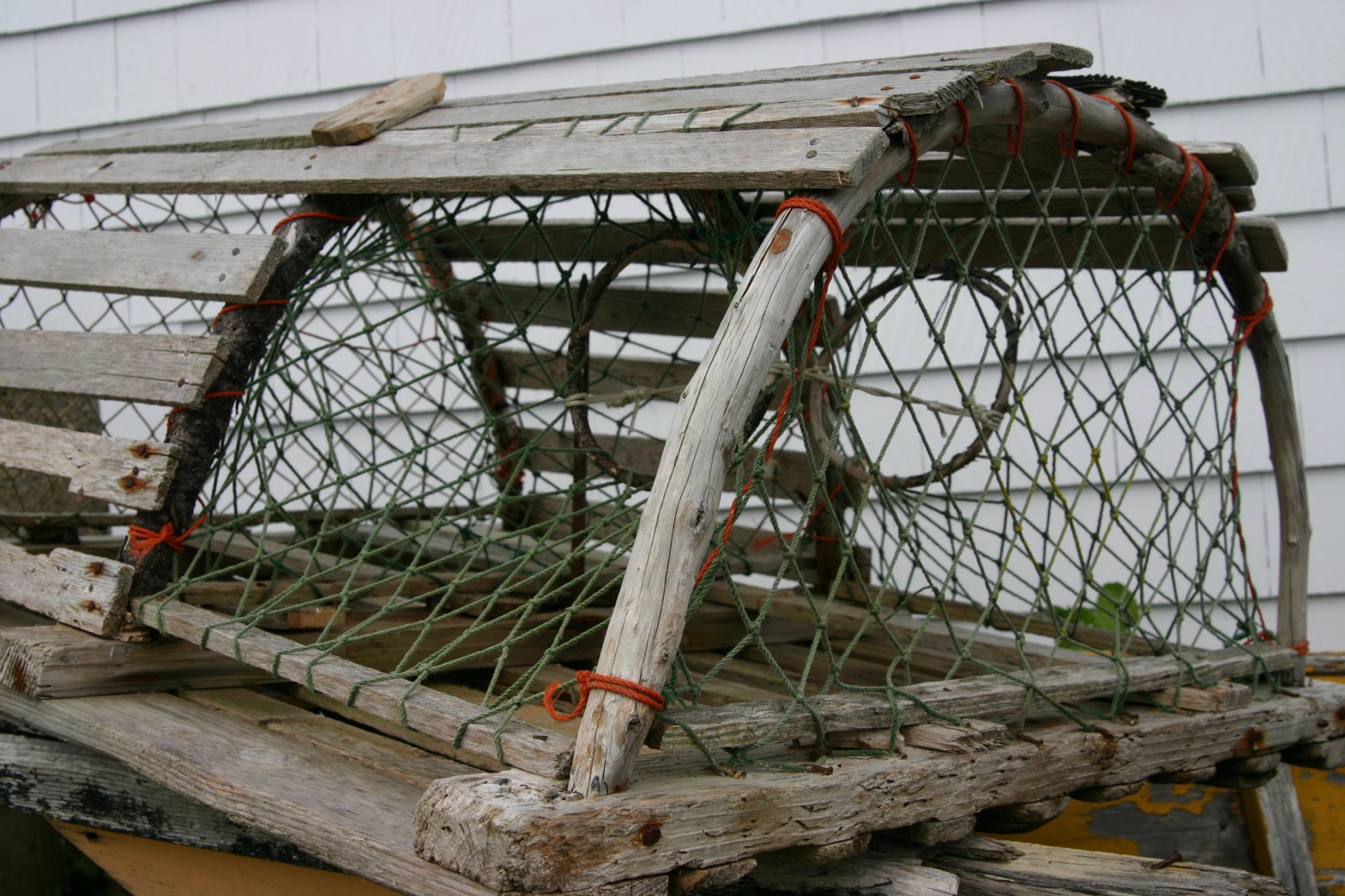
At length, Coomara turned to Jack and said, “Now, my dear boy, I’ll show you my curiosities.” He lead Jack to a little door which opened to a large room filled with a great many odds and ends that Coomara had picked up over the years. What chiefly took Jack’s attention, though, were things like lobster pots ranged on the ground along the wall.
“Well, Jack,” old Coo said, “what do you think of my curiosities?”
“Upon my soul, sir, they are mighty well worth looking at,” said Jack, “But might I be so bold as to ask what these things like lobster pots are?”
“Ah, the Soul Cages!”
“The what, sir?!”
“These things here that I keep the souls in.”
“What souls, if you don’t mind me asking.”
“Why,” said Coomara, “the souls of drowned sailors, of course! I come by them easily enough. I’ve only got to set a couple dozen of these traps when I see a good storm coming along, and then, when the sailors are drowned and the souls get out of them under the water, the poor things are almost perished to death, not being used to the cold. So they make into my pots for shelter and then I have them snug. I fetch them home and keep them here, warm and dry. Is it not well for them, poor souls, to get such good quarters?”
Well, Jack was so thunderstruck that he didn’t know what to say, so he said nothing. They went back to the dining room, had more brandy—which was excellent—and then, as Jack knew it was getting late and he didn’t want Biddy to worry, he stood and said that he thought it was time for him to go.
“As you like, Jack,” said Coomara, “but take a drink before you go. You’ve got a cold journey ahead of you.”
Jack knew better than to refuse a parting glass, and as he took it wondered aloud how he’d go about getting back home.
“Why worry about that when I’ll be showing you the way?” said Coo.
They went out of the house and Coomara took one of the tricorn hats and put it on Jack the wrong way around. He then lifted Jack onto his shoulder that he might launch the man up into the water.
“Now,” he says, “you’ll come up just in the same spot you came down in. And, Jack, mind you throw me back the hat.”
Coomara then threw Jack off his shoulder and up Jack shot like a bubble—whirr, whirr, whiz! Away he went through the water, up to the very rock that he had jumped off from. When Jack found a landing spot he threw the hat back into the water and it sunk like a stone.
The sun was just going down in a beautiful summer sky, so Jack perceived that it was late but not too late to overly worry his wife. He set off home, but when he got there he didn’t say a word to Biddy about what he’d spent his day doing. Instead, he brooded on the state of the poor, trapped souls and thought and thought and thought about what could be done to free them. At first, he thought to talk with a priest about it, but what could a priest do? And what did Coomara care for a priest? Besides, Coo was a good sort of fellow, and Jack believed that he truly did think that he was helping. But Jack knew these souls need to be free to move on to wherever they needed to go.
After much thought, Jack decided that the best thing to do was to invite Coomara to Jack’s own house and make him drunk—if he was able—then take his hat and go down and turn up the pots, let the souls free. Accordingly, he set about doing just that. Jack went to the rock he’d lept from some days before and threw a stone into the water. Coomara soon surfaced and asked Jack what he wanted. Jack then invited the merrow around to his house for a spot of dinner and a few drinks. And he did it on a day he knew his wife would be gone so as he didn’t frighten her witless on account of the merrow.
So the merrow went to visit Jack at Jack’s house and they dined on the finest fish Jack could provide and the finest foreign liquor. Jack, thinking of those poor souls stuck in lobster pots, plied the old merrow with glass after glass of brandy, and encouraged him to sing, hoping it’d put him under the table. But Jack forgot that he didn’t have the sea over his own head to keep it cool. The brandy got into and put him under the table instead. Old Coomara reeled on home, leaving Jack as dumb as a haddock on Good Friday.
Jack never woke ‘til morning, and then he was in a sad way. Serves him right for thinking he could make the old merrow drunk is what I say! But Jack, after he recovered some, spent the day ruminating about how he could free those souls and at last thought, “I bet old Coo never had a drop of poteen (that being a strong homemade brew—moonshine, if you will). I’ll invite him ‘round again so I can have another twist at him!”
So Jack asked Coo again and Coo laughed at him for not having a better head, saying he’d never live up to his grandfather.
“Well, try me again,” said Jack, “and I’ll drink you drink you drunk then sober then drunk again!”
Coo obliged and once again they met for dinner and drinks and this time rather than set out the brandy or any other foreign spirits after they had eaten their fill, Jack brought out the poteen and plied Coomara with drink after drink. This time remembering to take one sip for every glass the merrow drunk. Soon enough the old merrow was on the floor fast asleep. Jack snapped up the cocked hat, ran out to the rock, leaped in, and soon arrived at Coomara’s habitation.
All was still as a churchyard at midnight. Not a merrow, young or old, was there. Jack quickly went in and turned up the pots. He didn’t see anything—he had expected to, but remembered the priest saying that a living soul couldn’t see a dead one, no more than a person could see the wind—only he heard a little whispering whistle with each pot he opened and upturned. Having done all he could for the souls trapped inside the lobster pots, he said a prayer that each soul find their place, then set the lobster pots back in their place.
Jack set about returning home. He put the hat on the right way, which is to say the wrong way around, but when he got out he found that the water was so high above his head that he couldn’t reach it. He walked around looking for a ladder but could find none. There was not even a tall rock to be found. At last, he saw a spot where the sea hung lower than any other. And just as he came to it a big cod put down its tail. Jack jumped and caught ahold of it, and the cod gave a bounce to shake him off and pulled Jack the bit higher he needed to get into the water. As soon as the hat touched the water Jack was whisked away. Up he shot like a cork, dragging that poor cod that he forgot to let go of. He got to the rock in no time, and without a moment’s delay hurried home, rejoicing in the good deed he had done.
When he got home Jack wakened Coomara and, perceiving the fellow rather dull, bid him not to be so downcast. ‘Twas many a good man that was sensitive to poteen, and that on account of not being used to the stuff. Jack offered the merrow, by way of a cure, the hair of the dog what bit him. Coomara, however, had had quite enough and without having the manners to speak one word of civility, sneaked off to cool himself by a jaunt through the saltwater.
Coomara never missed the souls. He and Jack continued to be the best of friends in the world, and no one, perhaps save the saints and other such holy spirits, ever equaled Jack for freeing souls from purgatory; for he contrived fifty excuses for getting into the house below and turning up those lobster pot soul cages. All unbeknownst to his friend the merrow.
Their friendship continued for some years. Until one morning when Jack threw a stone into the water and Coomara never surfaced. Jack threw another stone and another, but no matter how many stones he threw that day the merrow never came. Jack tried again the next day and the next after that, but it was to no purpose. The merrow never came again, and since Jack had no hat to travel with he couldn’t go down to see what had become of him. But it was his belief that the old man, or old fish, or whatever it was he was, had either died or moved to some other part of the sea. For Jack never saw his friend again.
Or that’s the story as I know it anyway.
Featured Image: Lobster Trap, Hartmut Inerle, CC BY-SA 3.0 http://creativecommons.org/licenses/by-sa/3.0/, via Wikimedia Commons
 Knotting the Wind